
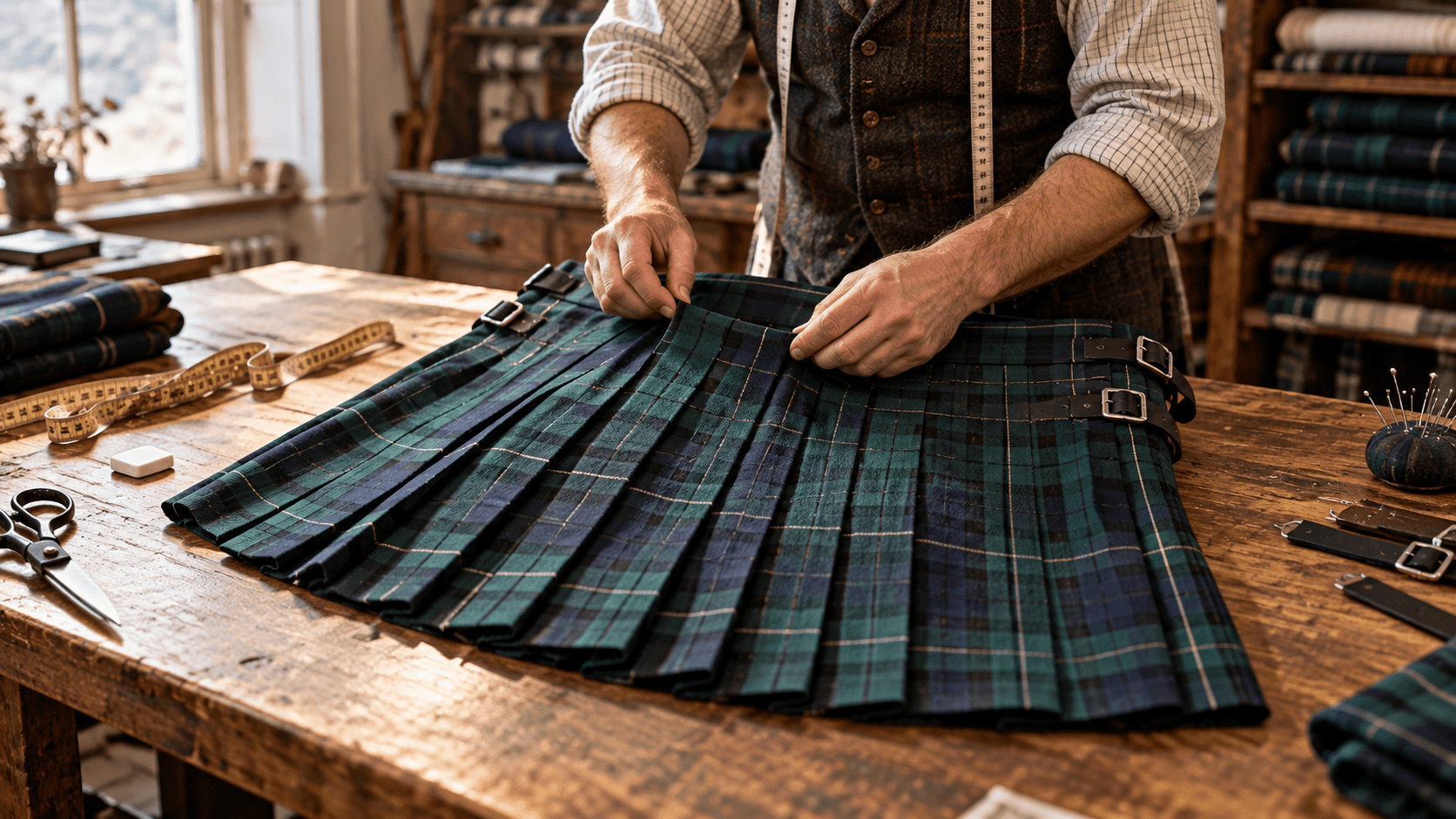
Traditional & Highland Wear
A kilt design becomes easier to develop when the fabric, pleat arrangement and fit are specified together. Start by identifying the style and the intended wearing position, then record how the pattern and finishing details should appear in the finished garment.
For buyers building a Traditional & Highland Wear collection, a complete brief makes the first sample more useful. This guide explains the decisions to prepare around tartan, measurements, pleating and hardware before approving a reference for the next stage.
Choose the kilt style before selecting fabric
Describe whether the collection follows a traditional, contemporary or utility direction. Identify the intended customer, wearing occasion and size range. Show the front, back and sides, including any pockets or other features that affect the garment's appearance and construction.
If a design follows a particular ceremonial or styling reference, identify the details that matter to the project. A style name leaves room for interpretation. Mark the apron shape, fastening position and finish you want to see in the sample so the team can review those details directly.
Approve an identified tartan or fabric reference
Record the proposed fabric composition, weight, handle, colour and finish. For tartan, identify the design, pattern repeat and scale using a labelled reference. Compare a physical sample where possible so the colour and pattern decision can be reviewed consistently.
Discuss the material alongside the planned garment dimensions and pleating arrangement. Keep the source reference and approval comments with the brief. If an alternative is proposed, review how its pattern, feel and construction relate to the intended result before approving the change.
Decide how the pleats should show the pattern
Specify the pleat style, direction, depth and visible alignment. For a patterned fabric, show what should appear across the back when the pleats are arranged. An annotated photograph or marked sample helps explain which part of the pattern should remain visible.
Review the sample from the back and sides as well as the front. Check the intended relationship between the apron, pleats and overall proportions. Discuss material consumption for the actual fabric width and construction, keeping those decisions connected to the selected design.
Record waist position, seat and finished length
Agree how each measurement is taken and where the kilt is intended to sit on the wearer. Record the waist, seat and finished length in a consistent chart, together with the sample size and reviewer measurements. A change in wearing position should be clear in the comments.
Assess the garment while standing, walking and sitting under the agreed review conditions. Check apron overlap, balance and the usable fastening adjustment. For a size range, review the grading approach and proportions rather than relying on the appearance of a single sample size.
Specify buckles, straps and finishing details
Document strap and buckle references, dimensions, colour and placement. Include pocket positions for utility designs and identify accessories that are part of the project. Keep styling items in reference photographs clearly separate from the items being specified for production.
Review attachment points, internal finishing, edges and labels in the sample. Record care information for the actual fabric and construction with the people responsible for the product details. Keep artwork and hardware references versioned so later changes can be compared with the approved sample.
Kilt sample approval checklist
Before approving the next stage, review the garment against the same brief and measurement method used during development:
- Style and wearing position match the intended collection.
- Tartan or fabric reference, colour and pattern scale are identified.
- Apron alignment and the pleating effect have been reviewed.
- Waist, seat and length follow the agreed measurement chart.
- Straps, buckles, adjustment and any pockets match the drawings.
- Internal finishing, labels and included accessories are checked.
- Required changes and the approved sample revision are recorded.
Prepare a handover for every style and size
Combine the approved sample, fabric reference, measurement chart, pleating instructions, hardware list and branding files into one handover. Identify differences between styles, colourways and sizes so each version can be reviewed against the right information.
For a development discussion with KR Brothers CO., prepare the style drawings, target quantities, size range, fabric or tartan direction, destination market and preferred timeline. These details help turn a broad kilt collection idea into specific questions about materials, fit and sampling.
