
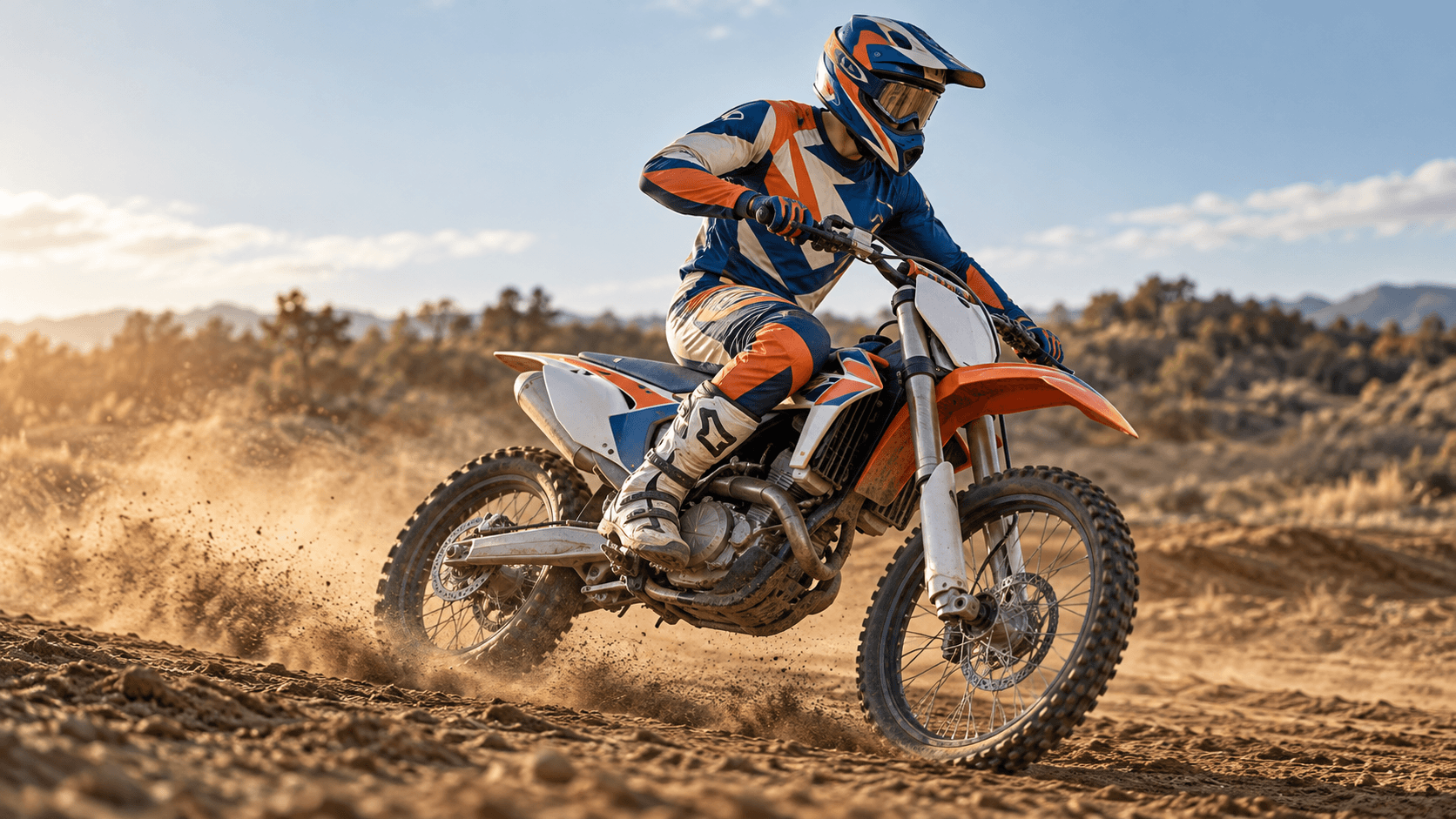
Motorbike Apparel
A motocross apparel collection needs a clear relationship between the jersey, pants and graphics. Develop the garments as a set while recording the fit and construction requirements for each piece. This helps a brand keep its visual direction consistent without leaving important sample decisions to interpretation.
Begin with the intended wearer, size range and equipment or layers the garments should accommodate. Then use the following steps to prepare the drawings, artwork and review notes for a focused development discussion.
Design the jersey around reach and coverage
Describe the intended torso length, sleeve shape, neckline and front-to-back hem relationship. Explain whether the jersey will be tucked into the pants and show the coverage you want in the agreed review position. Include the size and any layers used during the fit assessment.
Review the jersey with the wearer reaching forward and moving through the positions identified in the brief. Mark where the hem lifts, sleeves pull or extra material gathers. Use those observations alongside the measurement chart so the next pattern revision has a clear purpose.
Build pant shape around the knee and waist
Specify the waist position, fastening arrangement, rise, knee shape and lower-leg profile. Identify equipment worn beneath or over the pants and review the sample with the intended combination where appropriate. Record the references used so subsequent sample rounds remain comparable.
Check the adjustment arrangement and the relationship between panels when the wearer bends. Mark pressure, excess material or access issues by location. Comments about a knee panel or waistband should explain the expected result, making the correction easier to assess in the next sample.
Choose materials for each garment panel
Identify the materials proposed for jersey panels, stretch areas, pant panels and lining. Compare the selected references in connection with the pattern, including joins between materials that behave differently. Review the assembled result as well as the individual swatches.
Record any performance requirements separately and agree how they will be assessed for the particular product. The appearance of a motocross garment or the thickness of one panel does not establish protective performance. Keep proposed material substitutions and their review status visible in the development record.
Prepare graphics for the cut panels
Create artwork with the technical drawing and panel boundaries in view. Mark logo positions, intended scale, colour references and any design that continues across a seam. Identify the artwork version and the sample size on every approval sheet.
Review what happens to a graphic near a seam allowance, pocket opening or stretch area. Ask how its position will be handled across the proposed size range. A large chest logo and a smaller sleeve detail need their own placement references so both can be assessed consistently.
Review the jersey and pants as a set
Check the garments individually, then together in the agreed fit conditions. Compare the relationship between colours, panel shapes, logo positions and the waist area. Record the effect of any change to torso length, waistband height or garment overlap on the overall appearance.
Review fastenings, internal finishing and labels alongside the visible graphics. Photograph front, back, side and detail views with enough context to locate each comment. Keep required corrections separate from optional additions introduced during the review.
Motocross sample review checklist
Use one checklist for the collection while keeping measurements and fit notes specific to each garment:
- Jersey length, sleeve reach and neckline follow the brief.
- Pant waist, knee shaping and lower-leg fit have been reviewed.
- Equipment and layers used for the assessment are identified.
- Panel materials and any substitutions have recorded references.
- Logo size, colour and placement match the artwork revision.
- Jersey and pant graphics have been reviewed together.
- Outstanding fit, construction and assessment decisions are listed clearly.
Build a clear collection handover
Bring together the approved garment revisions, graded measurement charts, panel material list, artwork files, labels and packaging instructions. Identify differences between colourways and sizes so an approval for one version is not applied to another without review.
For a project discussion with KR Brothers CO., prepare the jersey and pant drawings, target quantities, size range, reference fit, graphic direction and preferred timeline. Include the intended market and any technical requirements so the next sampling steps can be discussed against a complete collection brief.
