
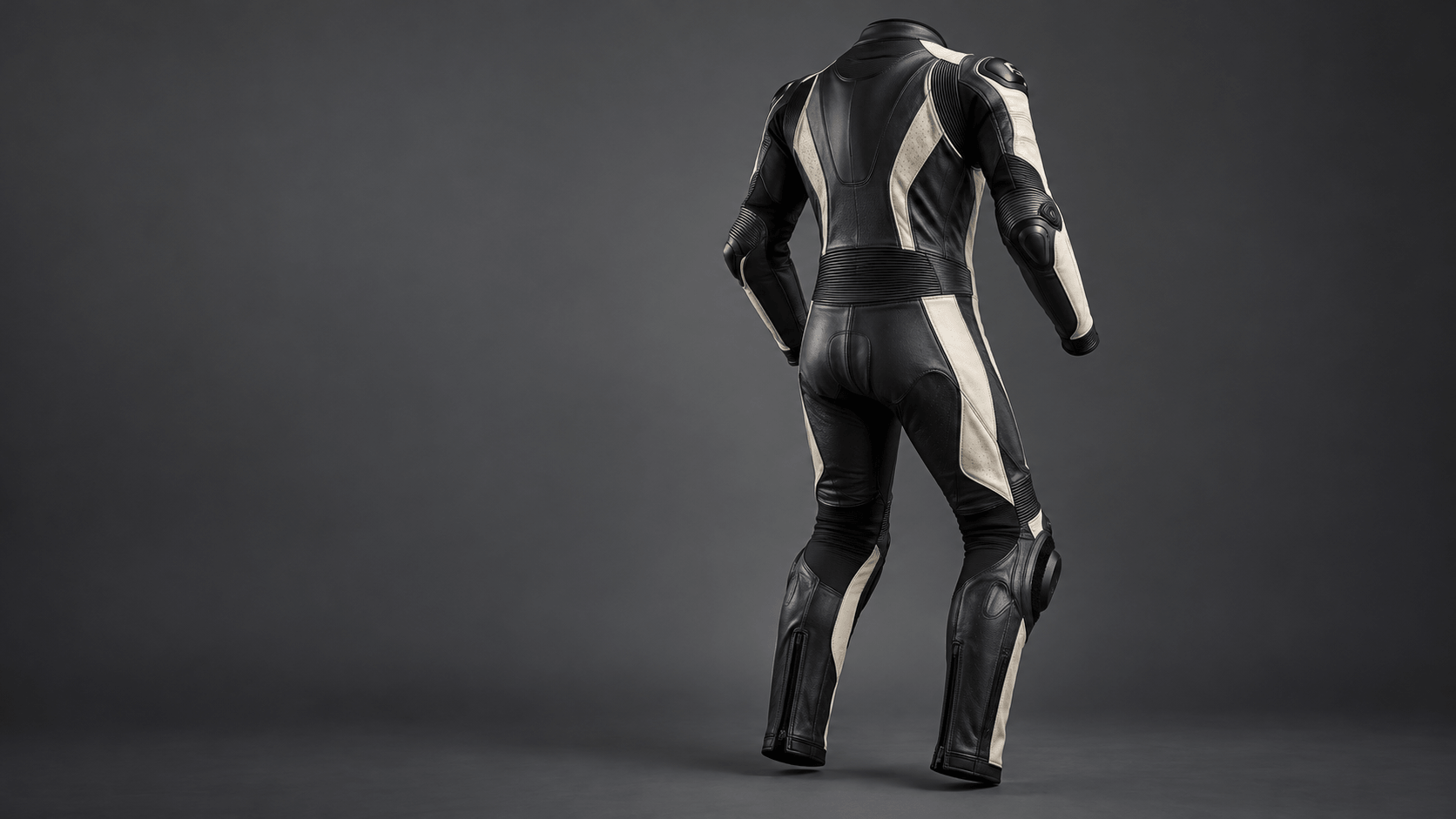
Motorbike Apparel
Motorbike leather apparel development starts with a clear choice of garment: a one-piece suit, a two-piece suit or a jacket. That choice helps define the fit, panel layout, closures and equipment the sample needs to accommodate. Agree those requirements before treating a reference photograph as a complete specification.
This guide is for brands and buyers preparing a leather apparel brief. It focuses on the decisions that make sample reviews more useful, from material references to the intended riding position and the exact version being approved.
Choose the suit or jacket concept first
Describe the intended wearer, use, size range and destination market. For a suit, show the complete front and back and identify the relationship between the torso, sleeves and legs. For a two-piece design, specify how the separate garments should work together, including any connection details in the brief.
or a jacket, identify the required body length, cuff arrangement, adjustment points and expected clothing underneath. Include detail drawings for features that cannot be understood from an overall photograph. Mark which parts of a reference garment should be followed and which are being redesigned.
Specify leather and stretch panels together
Record the proposed leather reference, colour, finish and agreed thickness range. Review the material at folds and seam intersections as well as in a flat swatch. The brief should connect the chosen leather to the pattern and construction you want to develop.
Map stretch areas, lining, reinforcement and any perforated panels on the drawing. Identify the material proposed for each area and review how adjacent materials join. Keep substitutions visible in the revision record so their effect on fit, finish and any assessment requirements can be considered before approval.
Fit the sample in the intended riding position
Use a measurement chart alongside a repeatable fit review. Establish the posture and layers that will be used when assessing the sample. Record the sample size and reviewer measurements so later revisions can be compared under similar conditions.
Check shoulder reach, sleeve position and torso length. For suits and trousers, also review the seat, knee shaping and lower-leg profile. Mark where material gathers or movement feels restricted. Describe the location and desired correction instead of asking for a general improvement to comfort.
Review closures, seams and component placement
Specify the main closure, cuff openings, adjustment features and connection details where applicable. Review their operation in the sample and show where branding, stretch panels and construction lines meet. Include the inside of the garment in the review photographs.
Where the project includes protectors or other components, identify the exact model, size, placement and retention arrangement to be assessed. Review compatibility in the assembled sample. A component list alone leaves unanswered questions about how the selected parts work with that particular garment design.
Keep performance requirements in the project brief
Write down any protective-performance requirements and the evidence requested for the intended market. Ask which finished design, material combination and revision the available documentation covers. Arrange the relevant assessment with the responsible technical parties for the actual project.
Leather appearance, padding and component presence do not establish the performance of a complete garment. Keep design changes traceable, particularly when they affect materials, seams or component placement. Confirm which changes require further review before treating a sample as ready for the next stage.
Sample checks for motorbike leather apparel
Review the suit or jacket against an identified drawing and sample revision. Your comment sheet should cover:
- Garment type, intended use and layers match the brief.
- Leather, stretch panels and lining have identified references.
- Fit has been reviewed in the agreed posture and sample size.
- Closures, adjustments and any connection details operate as intended.
- Specified components have been checked in the actual sample.
- Artwork, labels and outstanding assessment requirements are recorded.
- Required corrections and the next sample revision are clearly identified.
What to send with your development inquiry
For a discussion with KR Brothers CO., prepare the garment drawings, reference fit, size range, proposed quantities, material direction and preferred timeline. Include the intended market and any performance requirements that need technical review.
Keep the approved garment revision, measurement chart, material references, components and branding files together. A complete handover helps everyone refer to the same suit or jacket when discussing production decisions.
