
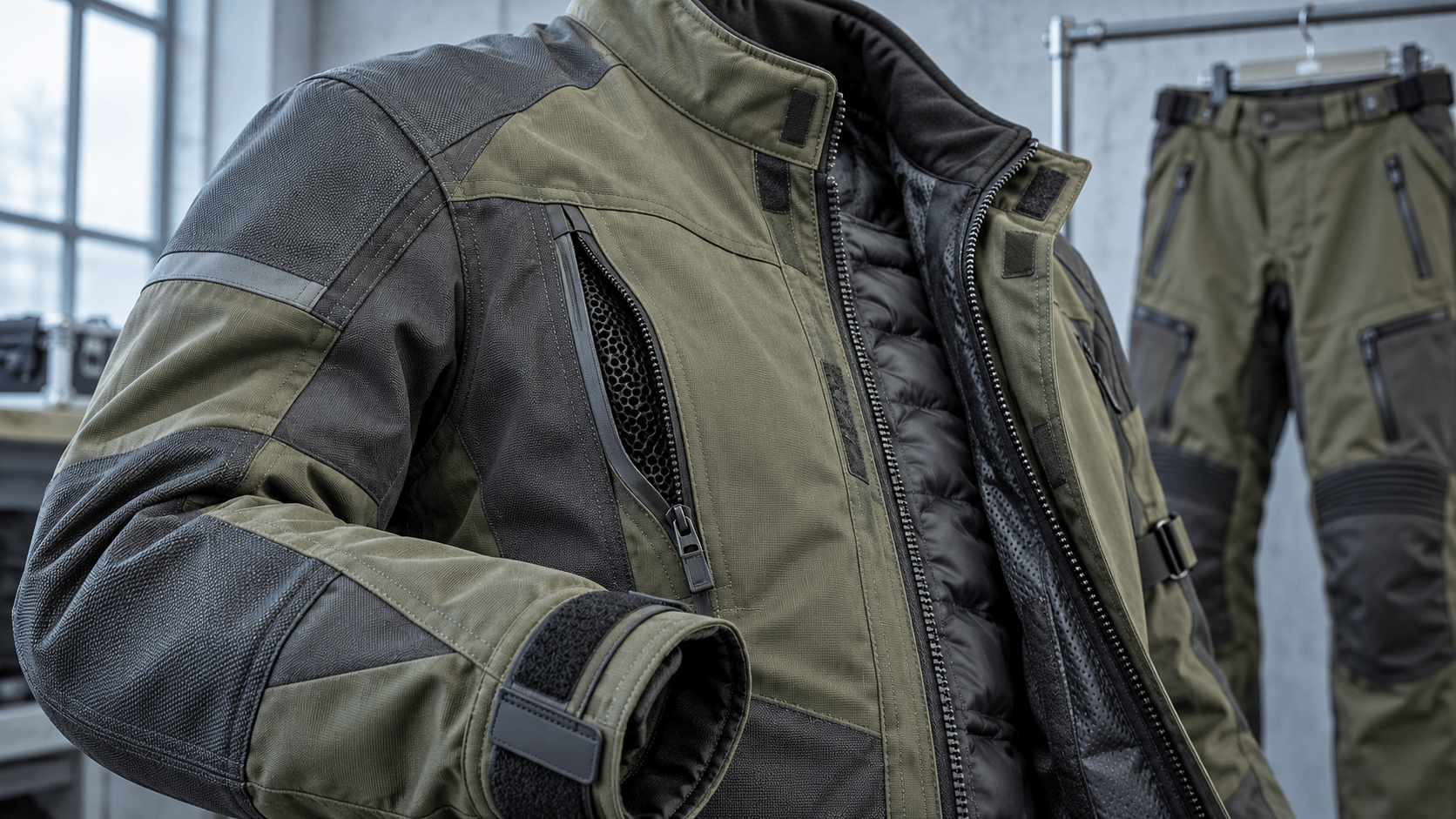
Motorbike Apparel
Choosing fabrics for motorbike textile apparel starts with the whole garment. The shell, lining, additional layers, openings and fastenings need to support the same design brief. Identify how the jacket or trousers should be used, then specify the materials and fit decisions that the sample will need to demonstrate.
For a brand planning a textile collection, a clear specification makes proposed options easier to compare. This guide explains the questions to settle around layering, ventilation, pocket access and sample review before confirming a production reference.
Start with the garment and layering concept
Describe the intended environment, riding position, customer and size range. Explain what the wearer is expected to have underneath the garment. A design intended for a single base layer needs a different fit discussion from one that must accommodate additional clothing.
Mark any fixed or removable layers shown in the concept. Identify which features belong to the proposed product and which are still open for discussion. Keep the technical drawings detailed enough to show how layers connect, how openings close and where the wearer can make adjustments.
Specify the shell, lining and additional layers
List the material proposed for each part of the garment. Record references for shell panels, stretch areas, lining and reinforcement, together with the colour and finish under consideration. Review physical samples where possible and keep the selected references labelled.
Ask how a proposed alternative compares with the approved material in construction, feel and the agreed requirements. Review joins between different materials and areas where several layers meet. This helps keep material selection connected to the garment the team is building.
Plan ventilation and pocket access on the drawing
Mark ventilation openings, pocket entries, closure directions and flaps on front, back and detail views. Explain which features the wearer should be able to operate and under what review conditions, including gloves or other equipment where relevant to the brief.
Check how the openings interact with surrounding panels and layers. A pocket may need a different position once the garment is fitted, and a fastening may become awkward when an adjustment strap is tightened. Record those observations on the sample so the next revision addresses the actual construction.
Review jacket and trouser fit together
Use the agreed posture and base layers for each fit review. Check shoulder and elbow reach on jackets, then the seat, knee shaping and lower-leg profile on trousers. Where garments are developed as a set, assess their overlap and any connection arrangement together.
Adjustment points should support the intended fit. Review access, usable range and any bulk introduced when they are tightened. Record reviewer measurements and sample size alongside the flat measurement chart. This makes it easier to understand why a dimensional change was requested.
Define how product claims will be assessed
If weather protection, ventilation or other performance is part of the brief, describe the required outcome and how it will be evaluated. Ask what evidence is available for the actual material and assembled garment under consideration. Identify any additional assessment needed for the intended product and market.
Treat protective requirements as a separate technical part of the brief. Keep the responsible parties, design revision and outstanding evidence recorded. A coating, membrane reference or component description should lead to a clear discussion of the complete design and the claims proposed for it.
Motorbike textile apparel specification checklist
Before reviewing the next sample, bring these references into one specification:
- Jacket or trouser drawings show all panels, openings and adjustments.
- Shell, stretch, lining and additional layers have identified references.
- The intended posture and garments worn underneath are recorded.
- Pockets, ventilation features and closures have sample-review notes.
- Components and any connection details are specified where applicable.
- Proposed performance claims have an agreed evaluation plan.
- Fit comments, material changes and artwork use the same revision number.
Approve revisions before the production handover
Use the sample review to separate required corrections from new styling ideas. Mark each location, describe the intended result and check adjacent details after a change. A revision to a panel or layer can require pocket placement, fit or construction to be reviewed again.
For an inquiry to KR Brothers CO., prepare your drawings, target quantities, size range, material direction, destination market and preferred timeline. Include the layering concept and any assessment requirements so the development conversation can focus on the textile garment you intend to create.
